


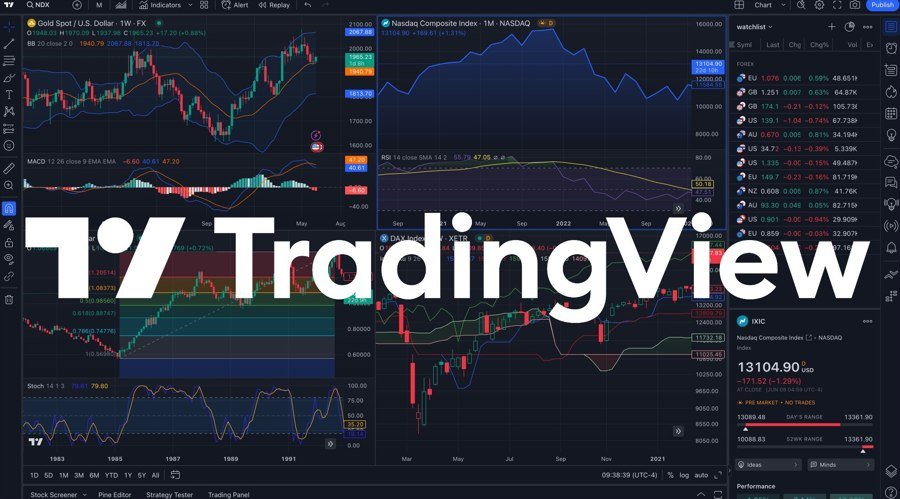
The adoption of any research environment as a community default reflects a combination of genuine capability, the network effect of shared reference points, and the accumulated investment practitioners have made in developing fluency with the tool. South Korean traders’ reliance on TradingView as their primary research environment combines all three of these mechanisms, and the relationship between the platform and the trading community has shifted from individual preference to shared infrastructure. Just as MT4 became the assumed execution context, the platform became the assumed research context when Korean traders in groups analyze charts, when forum discussions reference price levels and structural features, and when Korean trading educators produce content that illustrates analytical concepts.
The charting quality the platform offers aligns well with the analytical standards that Korean traders’ educational and professional backgrounds have established. Precise rendering, accurate level placement tools, and a flexible annotation system support the kind of exacting chart work Korean traders apply. Unlike less precise charting tools, the platform does not introduce visual approximations that distort price relationships. That alignment between the platform’s capabilities and Korean traders’ analytical requirements has produced an integration that feels natural rather than adapted.
The Pine Script ecosystem has developed a Korean-language component that reflects both the Korean developer community’s engagement with the platform and the analytical requirements of Korean traders that globally produced indicators do not always address. Indicators incorporating BOK announcement timing and volatility characteristics specific to the Korean market and KRW pairs serve Korean traders with tools calibrated to the market conditions they actually trade. That local contribution to the platform’s ecosystem has solidified the relationship between Korean traders and the platform, producing a depth of local relevance that a globally oriented platform would not have achieved on its own.
The ability to conduct multi-asset research within a single environment has grown in importance as Korean traders have diversified beyond the forex pairs that initially brought retail participants to the platform. A Korean trader analyzing USD/JPY, KOSPI 200 futures, gold, and US technology sector instruments can use TradingView to work across all of these without switching between separate platforms for each asset class. The analytical continuity that a unified research environment provides produces a more comprehensive understanding of cross-market relationships than fragmented analysis across separate platforms rarely produces.
The alert system has been central to making the platform practical for Korean traders whose professional schedules limit the time available for active market monitoring. The ability to configure alerts based on specific analytical criteria rather than price alone, delivered reliably across desktop and mobile, has made the system a genuinely functional tool rather than a secondary feature. Korean traders who have configured alerts to trigger only when specific analytical conditions are met report that the system has shifted their relationship with the market during working hours from active monitoring to confident delegation, with meaningful implications for sustaining a trading practice alongside a demanding career.
The platform’s status as the default research environment for South Korean traders reflects its success in meeting the specific demands that analytical sophistication, professional constraints, and community learning infrastructure create. Its default status results from a combination of genuine capability and genuine need across enough dimensions to make it part of the community’s shared infrastructure rather than simply a popular choice among alternatives. The most practical expression of this division is that Korean traders use the platform for research and analysis while relying on MT4 or MT5 for execution, a workflow that reflects each tool’s natural strengths.
